
Nanoscience
Postgraduate Program | School of Science
Nanoscience
Nanoscience at Zewail City offers a research-driven postgraduate pathway focused on understanding and manipulating materials and phenomena at the nanoscale. The program combines strong foundations in basic sciences with advanced interdisciplinary research across nanotechnology, materials science, and biomedical applications.
Students develop expertise in nanomaterials, nanomedicine, and functional nanosystems through hands-on research and advanced laboratory training, preparing them to contribute to scientific discovery and technological innovation.
Why Study This Program
at Zewail City?
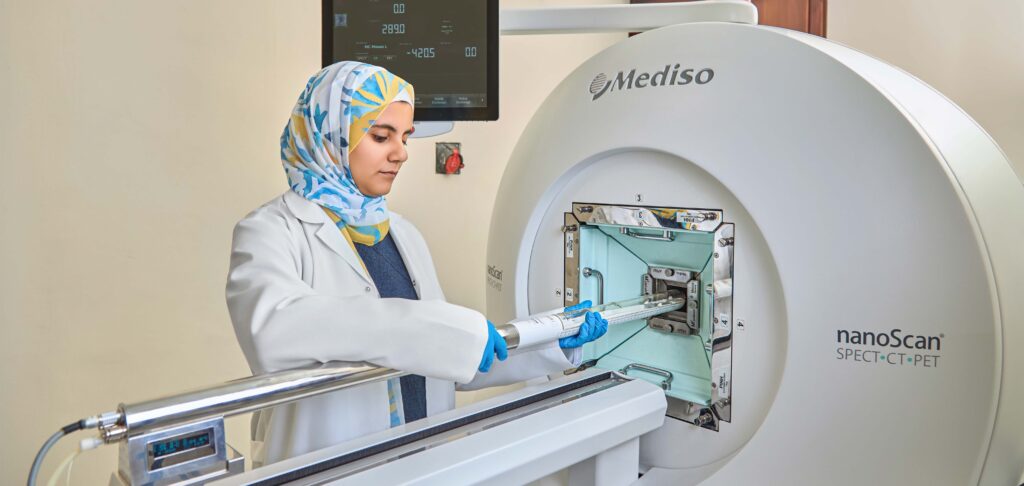
- Access to advanced research facilities and specialized laboratories
- Interdisciplinary environment integrating science, engineering, and biomedical fields
- Faculty mentorship from experienced researchers with international expertise
- Strong focus on research and innovation in emerging nanotechnologies
- Opportunities for international collaboration and scientific exposure

Key Areas of Study
- Nanomedicine and cancer nanotechnology
- Smart drug delivery systems
- Nanobiotechnology
- Tissue engineering and regenerative medicine
- Nanobiomaterials and functional materials
- Biosensors and diagnostic technologies
- Organic synthesis and nanoformulations
Available Degrees
M.Sc. in Nanoscience
Program Information
| Degree Type: M.Sc. |
Study Mode: Full Time |
Duration: 2 Years |
| Total Credit Hours: 40 |
Language of Study: English | School: School of Science |
Program Overview
The M.Sc. in Nanoscience is a research-based program designed to develop advanced knowledge and practical skills in nanoscale science and technology. The program combines core scientific foundations with specialized study and laboratory research, enabling students to investigate and develop nanomaterials and nanoscale systems for advanced applications.
Students are trained in experimental techniques, material characterization, and data analysis, preparing them to conduct independent research in nanoscience and related fields.
Program Educational Objectives
Within a few years of graduation, graduates are expected to:
- Develop strong knowledge of nanoscale phenomena and material behavior
- Design and develop nanomaterials for advanced applications
- Apply research methodologies in nanoscience and nanotechnology
- Work effectively in interdisciplinary research environments
Graduate Outcomes & Competencies
Upon completion of the program, graduates will be able to:
- Understand nanoscale interactions in materials and systems
- Synthesize and characterize nanomaterials using advanced techniques
- Apply experimental and analytical methods in nanoscience research
- Identify suitable applications for developed nanomaterials
- Conduct independent research and communicate findings effectively
Research Experience & Thesis
The program includes a structured research component that enables students to conduct independent scientific investigations within their chosen specialization.
Under faculty supervision, students develop a research proposal, apply advanced experimental and characterization techniques, and analyze results using scientific methodologies. The program culminates in an M.Sc. thesis, where students address a defined research problem and contribute to the advancement of nanoscience.
Career & Academic Pathways
Graduates of the Nanoscience program may pursue:
- Academic and research careers in universities and research institutes
- Roles in nanotechnology, biotechnology, and advanced materials industries
- Research and development positions in high-tech sectors
- Innovation and startup development in nanotechnology applications
- Leadership roles in scientific and industrial research environments
Ph.D. in Nanoscience
Program Information
| Degree Type: Ph.D. |
Study Mode: Full Time |
Duration: 4 Years |
| Total Credit Hours: 60 |
Language of Study: English | School: School of Science |
Program Overview
The Ph.D. in Nanoscience is a research-intensive program designed to develop independent researchers capable of advancing knowledge in nanoscale science and technology. The program focuses on understanding nanoscale phenomena and applying advanced scientific approaches to develop innovative nanomaterials and functional systems.
Students engage in original research addressing emerging challenges in nanoscience, with strong emphasis on interdisciplinary applications and scientific innovation.
Program Educational Objectives
Within a few years of graduation, graduates are expected to:
- Develop advanced knowledge of nanoscale phenomena and material behavior
- Design and develop innovative nanomaterials and nanosystems
- Apply advanced research methodologies in nanoscience
- Contribute to scientific advancement across interdisciplinary fields
Program Learning Outcomes
Upon completion of the program, graduates will be able to:
- Conduct independent and original research in nanoscience
- Synthesize and characterize nanomaterials using advanced techniques
- Apply experimental, analytical, and modeling methods in research
- Identify and develop applications for nanoscale materials and systems
- Communicate research findings through publications and presentations
Research Experience & Dissertation
The Ph.D. program is centered on independent, high-level research. Students develop a research proposal under faculty supervision and conduct in-depth investigations using advanced experimental and analytical techniques.
The program culminates in a doctoral dissertation representing a significant scientific contribution, often supported by publications in peer-reviewed journals and participation in international conferences.